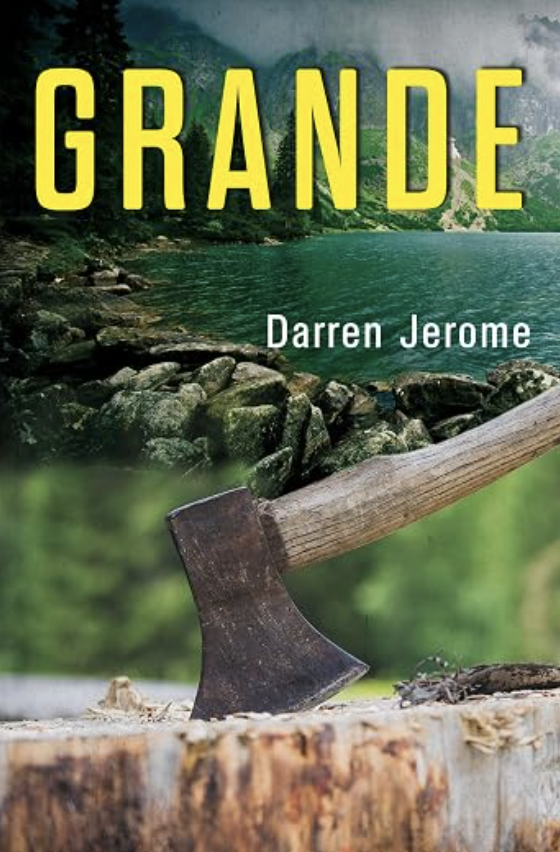
Grande by Darren Jerome
2025, Vanguard Press, $17.99
Historical Fiction
This sequel to Lowertown follows the two brothers, Hugh and Richard Brislin as they leave Bytown in the wake of the Shiners’ gang war that tore up much of the peace of the town and the economy of the valley. They find themselves fleeing Richard’s Shiner past and working on a farm up the valley, away from the prying eyes of Bytown. The past is never really the past, and catches up with the Brislin boys towards the end, but much of the story revolves around work on the farm, and tension between them and the foreman.
When I’m reading a sequel, there does have to be a bit of a comparison to the original, and I immensely preferred this to Lowertown. The characters were more fleshed out, and there wasn’t much wasted space in the writing. There were no unnecessary characters or winding descriptions, giving the characters a sense of urgency. Jerome’s writing is much tighter than it was in his earlier book.
The book isn’t focussed on the storyline, so much as the character of the brothers, particularly Hugh, and how they try to move on as refugees on the Ottawa River. While those two characters are well defined, and the farm owner has some development later in the story, I would have liked to better understand her tale, and the tale of what made Christopher the foreman become the malignancy that he was.
At the end of Lowertown, Hugh shot his brother in the head, who now suffers from a certain degree of brain damage. With that and the conflict amongst the labourers, this story does command a certain comparison to “Of Mice and Men” by John Steinbeck. The comparison between the Algonquin Pukwugies and Irish Faeries also invites a certain comparison with Charles De Lint’s Moonheart. These similarities don’t take away from the story, but add a certain familiarity to the yarn.
There were some elements that could have turned this book into a fantasy, or historical fantasy, if they were further explored, but for the most part the book stays grounded in a well-researched reality. In fact, what made this better than Lowertown was that while the research for both was solid, Grande inhabits a time and place, whereas Lowertown was trying to tell the story of a time and place and populated its story with characters placed there to give insight into the history. Grande is a much more human story.
I enjoyed the book more than I thought I would, and I’m looking forward to reading his next one when I get the chance.
★★★★☆