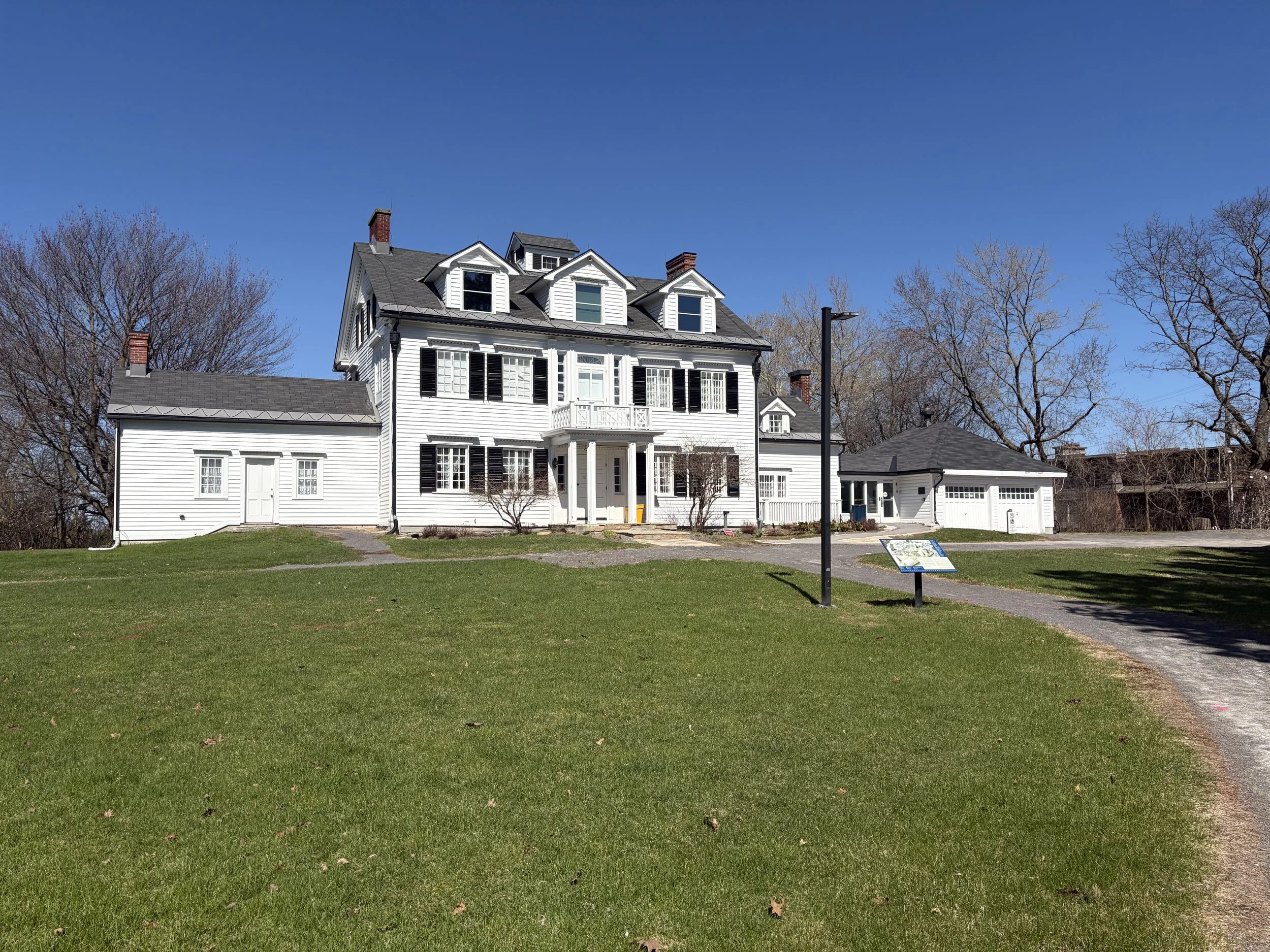
Billings Estate National Historic Site (https://ottawamuseumnetwork.ca/billings-estate-national-historic-site/)
2100 Cabot Street, $7.81 admission
Wednesday – Sunday 10 am – 5 pm
This unassuming Georgian manor-house is on a bluff, just a few hundred metres from Billings Bridge, but the nearby foliage and canopy add to the sense of isolation. Going down the street to park at the site, it feels like you’re just going to a regular house, albeit a fancy one. Unlike the other museums explored on this site, with the possible exception of Laurier House, Billings Estate seems very much a natural part of the city. It seems more “lived-in”.
The building exudes a sense of pragmatism, despite its beauty. On display on the main floor, you’ll find the tools that you’d expect to see in such a home from when it was first built, and then as you go through the building, the elements of the Billings family would boast as a yeoman colonial family. My personal interest was the early period, when Bradish and Lamira first broke ground, so I spent the most time there.
The Billings lived in the house (it was not always a museum) for many generations, before Bytown and after. In light of this, the Billings were educated, wealthy landowners, and the house interior developed from a farmhouse to a middle-class estate, where martial service was expected, and extended family connections were valued. Most of the girls of the Billings family didn’t marry and move away, but stayed home, which added to the feel of the house.
The cemetery was closed when I went there.
I visited in the spring, a week after the last of the snows had left, so the area was not as lively as it would be during the summer, but even then, you could tell the verdant spirit of the place. You could imagine looking down the hill to the river, the fields of agriculture that enriched this family, back in the days when the Rideau Canal was first being dug.
I was lucky enough to visit on a Friday afternoon in April, when there weren’t any other people in there. I was there for about an hour, and it was an interesting view of quotidian life in the 1800s.